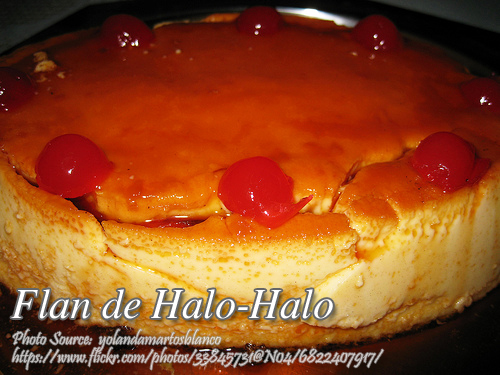
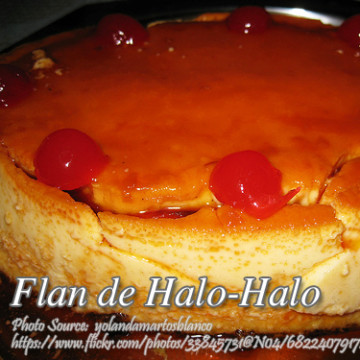
This Flan de Halo-Halo recipe is a traditional leche flan, a rich tasting custard and blended with the halo-halo ingredients like sweetened kaong (sugar palm fruit), macapuno, pinipig and garbanzos. This is a combination of two popular desserts, the halo-halo and leche flan. Actually leche flan is used as a topping on halo-halo but now in this recipe, the halo-halo ingredients is used as a filling for the leche flan. You can also add nata de coco but since it is too watery, it might make the flan too soft.
Flan de Halo-Halo : That Summer at Lola Caring’s and the Dessert I Still Think About
Okay I’m just going to say it — this is probably one of the best things to ever come out of Lola Caring’s kitchen. And that’s saying a lot because that woman could cook literally anything.
It was summer. One of those brutal, walang awa na tag-araw days in Laguna where you’re sweating before you even finish your breakfast. I was just sitting at her table doing nothing, honestly just waiting for merienda, when she came home from the palengke with this bag of stuff. Kaong. Macapuno. A small can of garbanzos. Some pinipig. I didn’t ask what it was for. You don’t ask Lola Caring questions. You just wait.
About an hour later she put this thing on the table. Golden. Wobbly. Smelled like caramel and pandan. And when she sliced it open — oh. There was color inside. All these little bits of sweet things tucked right into the custard like a surprise. I grabbed a spoon before she even finished plating it. No shame.
That was my first taste of Flan de Halo-Halo and I genuinely did not speak for a few minutes after. Just ate.
So What Even Is This Dessert
Okay so you know how halo-halo always has leche flan sitting on top? This flips that around completely. All those halo-halo ingredients — the kaong, macapuno, pinipig, garbanzos — they go inside the flan itself. Mixed right into the custard before it’s baked. So instead of two separate things on a plate, you get one dessert that tastes like both.
My Tita Zeny from Bulacan gave me the full recipe after I kept asking her about it for like two years. Haha. She said she got it from a neighbor who used to sell it at the fiesta every year. “Mas masustansya pa,” she told me. More filling. More exciting. She wasn’t wrong at all. That neighbor probably made a killing every fiesta season.
A Little History Na Baka Di Mo Alam
This is the part people skip but I actually find it interesting so stick with me for a second.
Leche flan is Spanish. It came over during the colonial period and it’s basically a cousin of Spanish crème caramel. The name literally just means milk flan. But here’s the thing — Filipino cooks took that recipe and quietly made it better over generations. More egg yolks. Richer. Denser. That signature texture that just melts when it hits your tongue. The Spanish version is honestly a little thin compared to ours.
So taking that already-improved classic and then stuffing it with kaong and macapuno? That’s just peak Filipino cooking honestly. We take something, make it our own, then make it even better. Love that for us.
Things Kuya Roel Taught Me That You Should Actually Listen To
My Kuya Roel is the kind of person who will stand next to you in the kitchen and narrate everything you’re doing wrong. Annoying in the moment. Very useful in hindsight.
He was the one who told me to always soak the pinipig in pandan water first before mixing it in. You boil a pandan leaf in half a cup of water, take the leaf out, and let the pinipig sit in it for a bit. Why does this matter? Because dry pinipig inside a custard is a texture problem — it stays too hard and you end up with these weird crunchy bits that don’t belong. Soaking it softens it just enough and it absorbs all that pandan fragrance too. The whole thing smells so good when it comes out of the oven. So yes. Soak the pinipig. Kuya Roel was right.
Also he told me not to add nata de coco and I ignored him the first time. Big mistake. Nata de coco is watery by nature and it throws off the whole custard — it came out too soft and didn’t hold its shape when I flipped it. Just skip it. I know it’s a classic halo-halo ingredient but it really doesn’t work here.
One more thing — when you caramelize the sugar in the mold, move fast. It goes from golden to burnt really quickly and burnt caramel is bitter and sad. Swirl it around to coat the bottom evenly then just leave it alone to set.
The Steam-Baking Thing Is Not Complicated, I Promise
Okay “bain-marie” sounds very chef-y but it’s really just putting your flan mold inside a bigger pan with water in it before sliding it into the oven. The water creates a gentle, indirect heat around the custard so it cooks slowly and evenly. No sudden high heat that makes the eggs scramble or leaves weird air bubbles all over your flan.
325°F. 45 minutes. That’s it.
Let it cool down after, then refrigerate it. Please don’t skip the chilling part. Cold flan is a completely different and better experience than warm flan. The texture firms up, the caramel syrup gets glossy, and it actually slices properly instead of falling apart on the plate.
Just Make It, Honestly
This serves eight people which makes it perfect for family lunches, fiestas, potlucks — basically any gathering where you want to bring something that looks like you worked harder than you actually did.
Serve it cold. Slice it generous. And maybe don’t tell anyone how easy it actually is once you’ve made it once or twice.
Lola Caring would approve. I’m almost sure of it.
How to Make Flan de Halo-Halo

Ingredients
- 1 pc pandan leaf
- 1/2 cup water
- 3/4 cup pinipig
- 1 cup coconut milk
- 3 Tbsp. sugar for caramel
- 1 can condensed milk
- 1/4 cup macapuno coconut sport
- 1/4 cup green kaong sugar palm
- 1/4 cup red kaong sugar palm
- 1/4 cup sweetened garbanzos chickpeas
- 2 Tbsp. cheese grated
- 1/2 tsp. dayap lime or lemon rind
- 4 pcs eggs
Instructions
How to make Flan de Halo-Halo:
- Boil pandan leaf in 1/2 cup water. Remove the leaf and soak the pinipig.
- Add the coconut milk and set aside. Meanwhile, caramelize 3 tablespoons sugar in a leche flan mold.
- Spread evenly and set aside. In a bowl, beat egg lightly.
- Add the condensed milk, pinipig mixture, macapuno, kaong, garbanzos, cheese and lemon rind.
- Mix thoroughly. Pour stricture in leche flan mold coated with caramelized sugar.
- Steam bake for 45 minutes in preheated oven at 325 ° F or until done.
- Serve chilled. Serves 8.
Notes
FAQ Section:
What is Flan de Halo-Halo?
It is a Filipino dessert that combines classic leche flan with traditional halo-halo ingredients like kaong, macapuno, pinipig, and garbanzos baked inside the custard.How long do you bake Flan de Halo-Halo?
It is steam-baked at 325°F for about 45 minutes or until fully set.Can I add nata de coco to this recipe?
It is not recommended because nata de coco contains too much water, which can make the custard too soft and prevent it from setting properly.